
On 26 May 2026, the PRO-MOTE project consortium successfully hosted its Final Awareness Raising Conference, bringing together more than 200 participants from across Europe in an online event dedicated to promoting migrant entrepreneurship, sharing inspiring success stories, and discussing practical solutions for better integration through employment and entrepreneurship.
The conference marked the culmination of the two-year PRO-MOTE – Promoting Migrant Opportunities, Training and Employment project, funded by the Citizens, Equality, Rights and Values (CERV) Programme. The event provided an opportunity to present the project’s key achievements while creating a space for dialogue among researchers, policymakers, business support organisations, NGOs, migrant entrepreneurs and other stakeholders committed to building more inclusive entrepreneurial ecosystems.
Setting the Scene: Why Migrant Entrepreneurship Matters
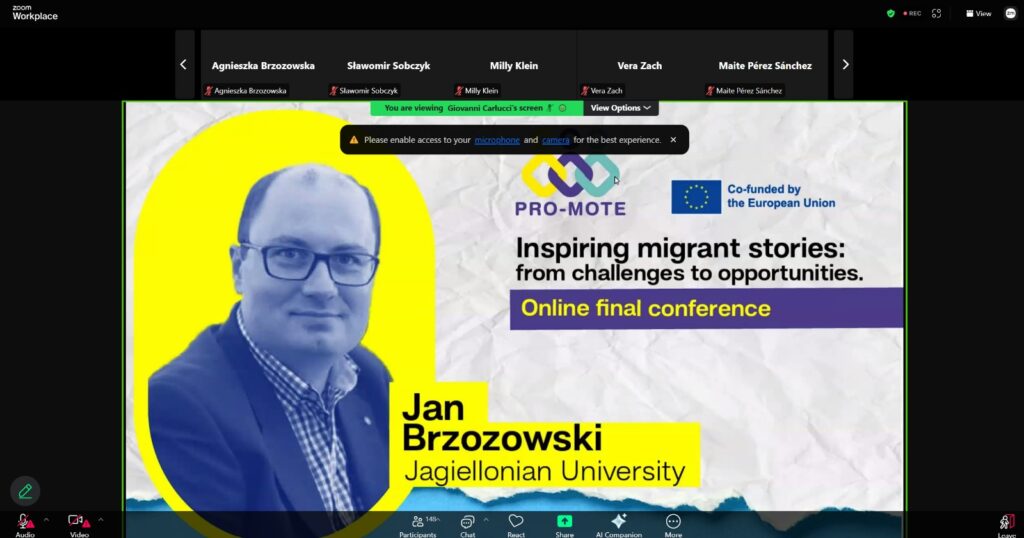
The conference opened with welcome remarks from the project coordinators, followed by an insightful keynote presentation by Dr. Jan Brzozowski from Jagiellonian University. Drawing on the PRO-MOTE research, he highlighted the growing importance of migrant entrepreneurship in Europe and the demographic, economic and social trends that make supporting migrant entrepreneurs increasingly relevant. His presentation explored both the opportunities and the persistent challenges migrants face when establishing businesses in European countries, emphasizing the need for coordinated support from institutions, policymakers and local communities.
Inspiring Stories from Across Europe
The heart of the conference featured inspiring personal stories from migrant entrepreneurs representing Austria, Croatia, Italy, Spain and Poland. Participants heard first-hand experiences from:
- Saira Shahid (Shahid Taxi OG, Austria)
- Mirela Rus (Break Time Croatia / Mar Escape Villa, Croatia)
- Ana Estrela (Ethnic Cook and President of the Italian Diaspora Coordination, Italy)
- God’stime Okojie (Il Gruppo Digitale, Italy)
- Arno Strotgen and Nancy Aliaga (Travel Work, Spain)
- Kandaka Dua (The Kandaka Agency, Poland)
Each speaker shared their entrepreneurial journey, from the initial idea and motivation to the obstacles they encountered and the lessons they learned while building successful businesses in their host countries. Their stories demonstrated that migrant entrepreneurship is not only about creating businesses, but also about resilience, innovation, intercultural exchange and contributing to local communities.
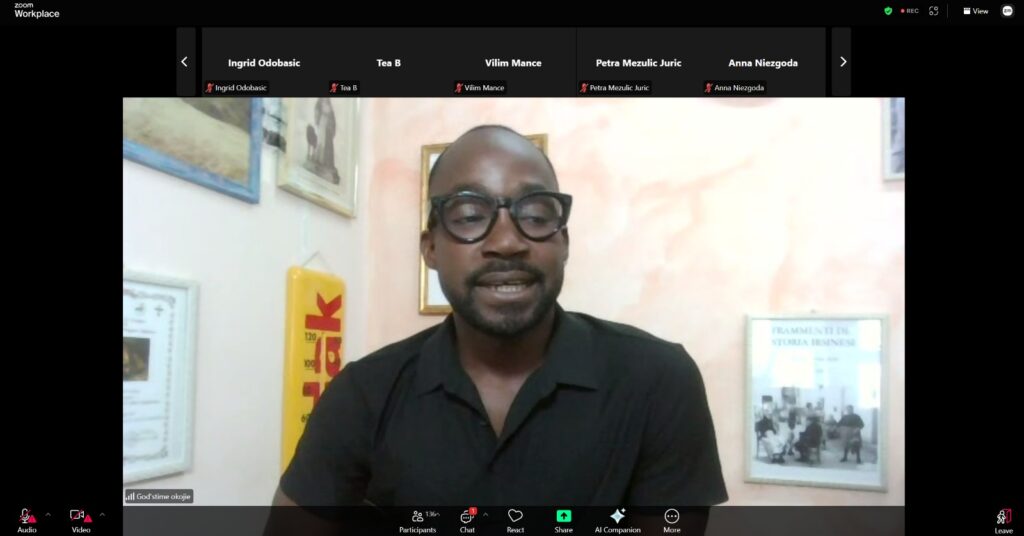

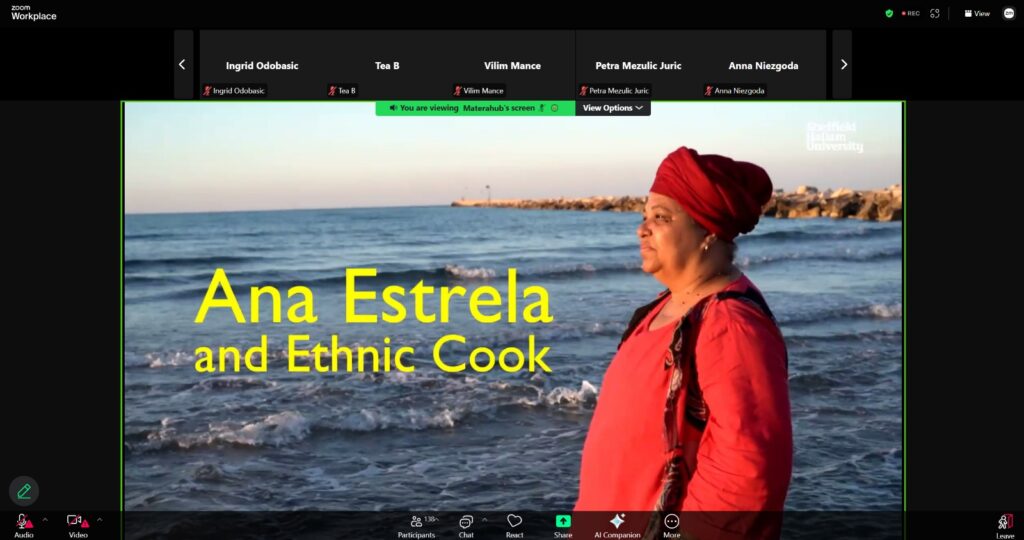
The moderated discussion and audience Q&A further highlighted common themes across countries, including the importance of perseverance, supportive networks, mentorship and access to information.
From Stories to Solutions
The second part of the conference focused on translating these experiences into concrete recommendations.
Representatives of all PRO-MOTE partner organisations reflected on the project’s achievements and shared lessons learned from the work packages they led:
- Paulina Pilipiuk (Multicultural Centre in Krakow) discussed the outcomes of the Local Solidarity Workshops in Poland and the importance of community-based support.
- Herwig Wallner (VHS Roma, Austria) highlighted the role of lifelong learning and educational programmes in supporting migrants’ integration and entrepreneurial development.
- Paolo Montemurro (Materahub, Italy) reflected on the project’s collaborative journey and presented key insights from the Online Inclusive Job Fair, demonstrating the importance of connecting migrants with employers and opportunity networks.
- Laura Sallent (CECOT, Spain) shared valuable lessons from collecting and promoting successful migrant entrepreneur stories across Europe.
- Maja Has (CEPOR, Croatia) presented the key outcomes of the Policy Accelerator Workshops and discussed policy recommendations aimed at creating more supportive entrepreneurial ecosystems.
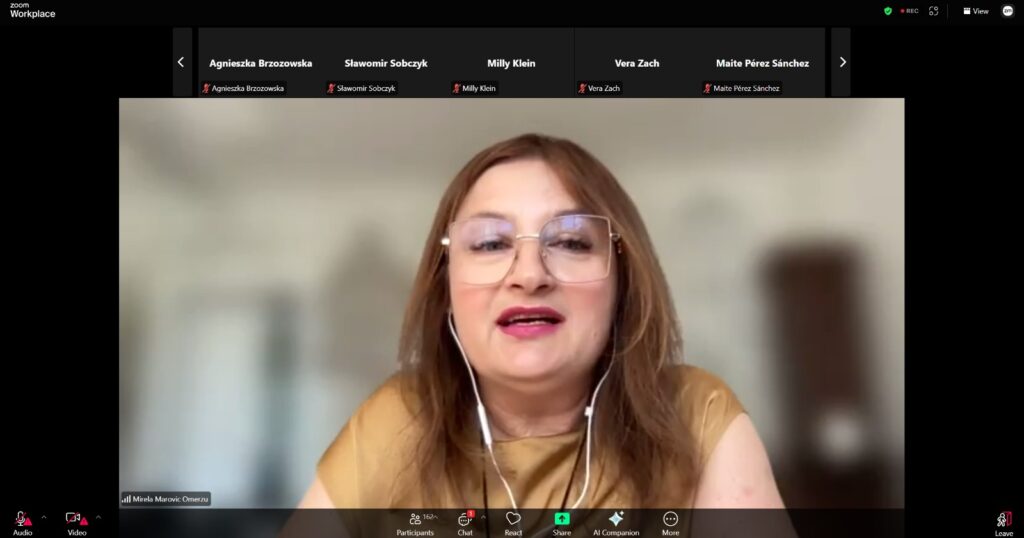
Moderated by Mirela Marović Omerzu PRO-MOTE project coordinator from the Institute for Creative Education, the panel explored three key questions:
- What works in supporting migrant entrepreneurs?
- What are the biggest remaining gaps?
- What needs to change at policy and ecosystem level?
The discussion consistently pointed to several recurring challenges, including administrative complexity, language barriers, limited access to finance, fragmented support services and insufficient networking opportunities. At the same time, all partners agreed that migrant entrepreneurs bring valuable skills, resilience, innovation and international perspectives that significantly enrich local economies and communities.
Key Project Results
Throughout the conference, participants were introduced to the main outputs developed during the PRO-MOTE project, including:
- Policy recommendations for improving support systems for migrant entrepreneurs.
- Practical tools and training materials designed to strengthen entrepreneurial and employment opportunities.
- Insights gathered through research, local solidarity workshops, policy dialogue, awareness-raising activities and the Online Inclusive Job Fair.
These results demonstrate that effective support for migrant entrepreneurs must go beyond inspiration—it should be practical, accessible, coordinated and embedded within long-term policy and ecosystem development.
Looking Ahead
The conference concluded with a strong message: while the PRO-MOTE project officially comes to an end, its impact continues.
The knowledge generated, partnerships established and tools developed throughout the project provide a solid foundation for future collaboration and for building more inclusive entrepreneurial ecosystems across Europe.
The consortium would like to sincerely thank all speakers, participants, project partners and stakeholders who contributed to the success of the conference and the PRO-MOTE project over the past two years.
Together, we have shown that when migrants are given opportunities, support and access to entrepreneurial ecosystems, they do not only build successful businesses—they help build stronger, more innovative and more inclusive societies.